

Blog
What Length Fishing Rod Should I Get? (The Ultimate Angler’s Matching Guide)

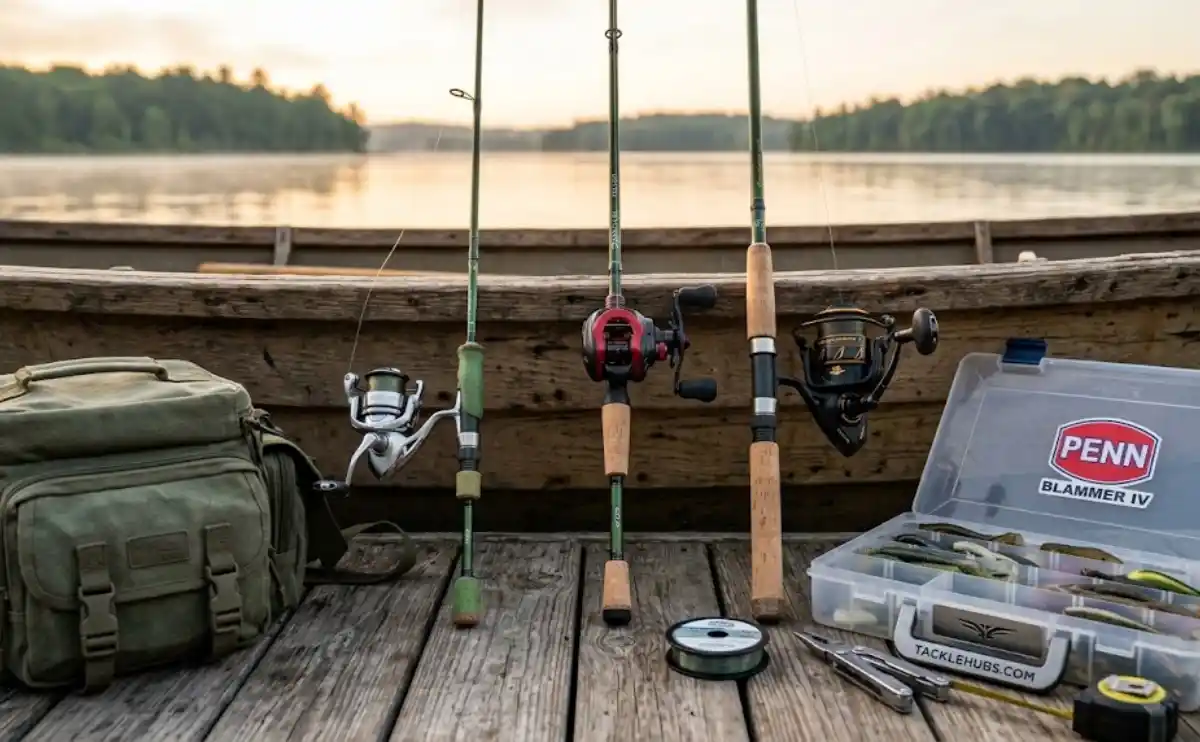
Whether you’re standing in front of a wall of rods at your local shop or scrolling through endless options online, one question hits every angler sooner or later: What length fishing rod should I get?
If you ask ten different anglers, you’ll get ten different answers. One guy swears by a snappy 6’0″ rod for tight creek casting, while another won’t hit the water without an 8’0″ monster launcher. Pick the wrong length, and you’ll end up with slapped boat gunwales, poor casting accuracy, or zero leverage when a big fish burrows into heavy cover.
As an angler who has logged thousands of hours casting everything from ultralight panfish rigs to heavy swimbait setups, I’m cutting through the marketing hype. In this guide, we’ll break down the exact physics of rod length, how it impacts your casting and hooksets, and how to pick the perfect length for your target species and fishing style.
Quick Answer: The “Golden Middle” Standard
If you want a single rod length that can handle 80% to 90% of all freshwater and light-saltwater fishing, here is the golden rule:
Get a 7’0” (7-foot) rod.
A 7-foot rod is the undisputed sweet spot in modern angling. It offers the ideal balance of casting distance, pinpoint accuracy, and leverage for hooksets. If you’re building your very first versatile combo, 7’0″ Medium or Medium-Heavy is your best starting point.
➡️ [Shop TackleHubs’ Top-Rated 7’0″ All-Around Fishing Rods] ➡️
Rod Length vs. Performance: The Trade-Off Matrix
Choosing a rod length comes down to a trade-off between Distance & Leverage vs. Accuracy & Control.
The Breakdown: Which Length Fits Your Style?
1. Short Rods (5’6” to 6’6”): Accuracy & Tight Quarters
Short rods are all about precision and maneuverability. Because there is less tip movement to control, you can hit tight targets (like under overhanging dock pilings or between flooded brush) with surgical precision.
When to Use a Short Rod:
-
Kayak Fishing & Small Boats: Easier to maneuver in tight seating positions without hitting the water or your craft.
-
Stream & Creek Trout Fishing: Navigating dense brush and tight tree canopies without snapping your rod tip.
-
Jerkbaits & Topwater Poppers: Shorter lengths prevent you from slapping the water surface when twitching the rod tip downward.
-
Kids & Beginner Anglers: Much easier to manage and less tiring for smaller hands.
2. Medium Rods (6’8” to 7’2”): The Versatile Workhorse
This is where most bass and multi-species anglers live. A 6’10” to 7’2” rod gives you enough tip speed to launch lures long distances while retaining the responsiveness needed to work finesse plastics or walk-the-dog topwaters.
When to Use a Medium-Length Rod:
-
All-Around Bass Fishing: Perfect for Texas rigs, jigs, spinnerbaits, chatterbaits, and medium crankbaits.
-
Walleye & General Freshwater: Ideal for trolling, jigging, or live-bait drifting.
-
Boat & Shore Combination: Gives shoreline anglers solid distance while still being easy to store in boat rod lockers.
3. Long Rods (7’3” to 8’0”+): Distance, Depth & Heavy Leverage
Longer rods act as giant levers. The extra length creates a wider casting arc, launching your lures significantly further into open water. Additionally, a long rod takes up more slack during a hookset, which is crucial when fishing deep water or heavy cover.
When to Use a Long Rod:
-
Deep Crankbaits: Takes deep-running lures out to maximum distances so they stay in the strike zone longer.
-
Punching & Flipping Heavy Cover: Extra leverage allows you to horse big largemouth out of matted vegetation.
-
Swimbaits & Swim Jigs: Manages heavy lures and heavy line test easily.
-
Surf & Bank Fishing: Helps clear coastal breaking waves or river currents.
3 Key Factors to Consider Before Buying
1. Your Height & Fishing Platform
If you are under 5’8” or fish primarily from a low-profile kayak, an 7’6” rod can feel unwieldy. Conversely, taller anglers (6’0”+) often find 7’0” to 7’3” rods extremely natural to swing all day long.
2. Transport & Storage Limits
Before pulling the trigger on an 7’6” one-piece rod, measure your vehicle cabin and rod lockers! If you drive a compact sedan, a 2-piece 7’0″ rod or a sub-7-foot rod will save you from accidental rod-tip crunches.
3. Rod Action & Power Matching
Rod length doesn’t work in a vacuum—it works with Power (Heavy, Medium, Light) and Action (Fast, Moderate, Slow).
-
For topwaters: A 6’8” Medium Fast rod keeps tip work crisp.
-
For deep cranking: A 7’6” Medium-Heavy Moderate glass rod cushions the strike while offering max casting distance.
Final Verdict: What Length Rod Should You Buy?
Here is my no-nonsense recommendation based on your main setup goal:
-
The Single “Do-It-All” Rod: 7’0” Medium-Heavy Fast (Handles jigs, Texas rigs, spinnerbaits, and soft plastics effortlessly).
-
The Finesse & Kayak Specialist: 6’6” to 6’10” Medium Fast.
-
The Big Bait & Deep Water Launcher: 7’4” to 7’6” Heavy Fast.
🎣 Upgrade Your Arsenal Today at TackleHubs.com
Ready to dial in your setup? Head over to Tacklehubs.com to explore our hand-picked selection of tournament-grade casting and spinning rods, complete with detailed spec filters to help you find your perfect length!