
Blog
What Color Fishing Line is the Best?(An Angler’s Real-World Water Test)

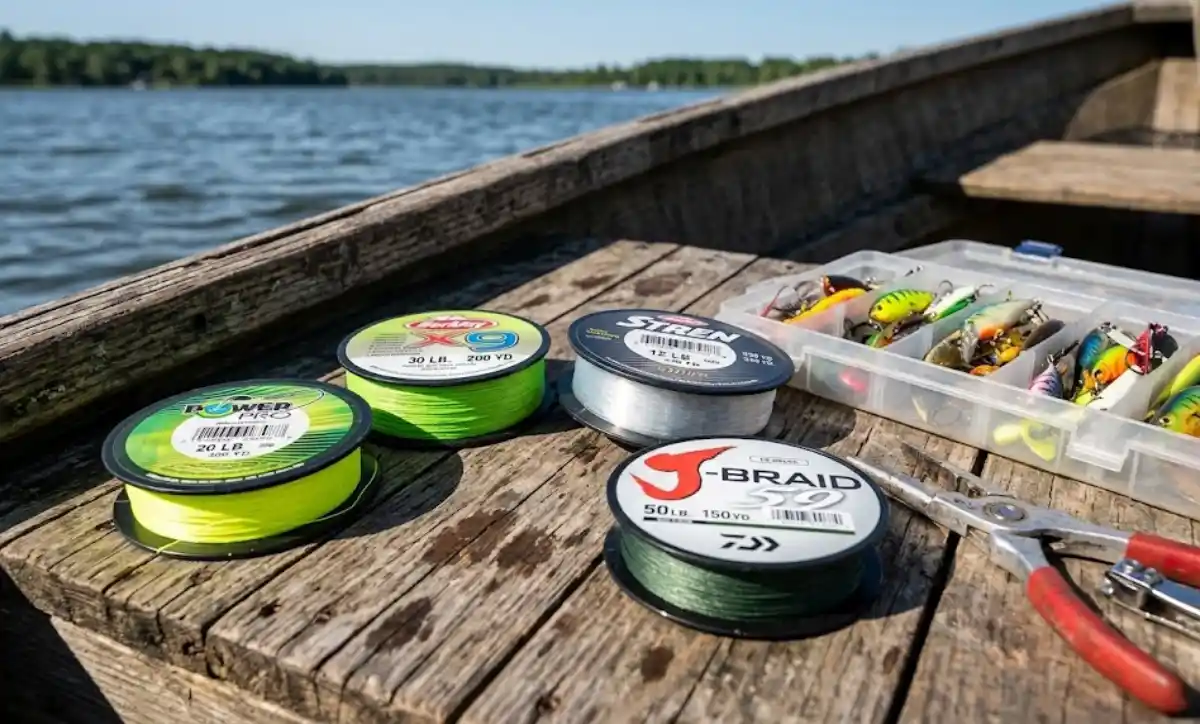
If you’ve ever walked down the fishing line aisle at a tackle shop, you’ve probably felt overwhelmed by the neon greens, bright yellows, clear strands, and camouflage reds. It begs the ultimate question: What color fishing line is the best?
Here’s the short answer that most gear brands won’t tell you upfront: There is no single “best” color for every scenario.
Line color selection comes down to a constant tug-of-war between two crucial factors: Line Visibility to You vs. Line Invisibility to the Fish.
After decades of tying knots, casting into crystal-clear lakes, and pulling giant bass out of muddy river channels, I’ve broken down real-world underwater tests, light spectrum physics, and practical line color pairing so you can catch more fish on your next trip.
Quick Guide: Matching Line Color to Water Conditions
If you’re heading out to the water right now, here is your quick cheat sheet:
| Line Color | Underwater Visibility | Best Water Type / Technique | Recommended Line Type |
| Clear / Clear-Blue | Almost Invisible | Crystal-clear lakes, finesse fishing, shy fish | Mono / Fluorocarbon |
| Low-Vis Green | Blends with Algae | Stained water, weeds, bass & walleye setups | Mono / Braid / Fluoro |
| Hi-Vis Yellow / Lime | Highly Visible (Above Water) | Murky water, line-watching, drift fishing, vertical jigging | Braid (PE) with Fluoro Leader |
| Red / Pink | Fades First Underwater | Offshore trolling, bottom bouncing | Mono / Fluorocarbon |
| Camo / Multi-Color | Breaks Up Line Profile | Tactical cover, variable water clarity | Braid |
The Physics of Line Color Underwater (Light Spectrum Breakdown)
To understand why line color matters, we have to talk about how light travels through water. Water absorbs light at different wavelengths as depth increases:
-
Red light is the first color in the spectrum to disappear (at around 15–20 feet deep).
-
Orange and Yellow fade next.
-
Green and Blue penetrate the deepest into the water column.
The Red Line Myth: Many manufacturers claim that red fishing line becomes completely “invisible” underwater. In reality, as red light is absorbed, the line doesn’t magically turn transparent—it turns into a dark gray/black shadow. In clear water, fish can still see that dark silhouette!
Breakdown of Popular Fishing Line Colors
1. Clear & Clear-Blue Monofilament / Fluorocarbon
-
Best For: Ultra-clear lakes, high-pressure waters, and line-shy species like Trout and Crappie.
-
Why it works: Clear lines allow natural sunlight to pass through without casting a harsh shadow. Clear-blue lines contain UV blockers that look clear under water but glow slightly under sunlight above water, making it easier for anglers to trace their line.
-
Pro-Tip: Fluorocarbon has a refractive index very close to water, making pure clear fluorocarbon the ultimate stealth leader material.
2. Low-Vis Green (The All-Rounder)
-
Best For: General freshwater fishing, bass fishing in vegetation, and stained lake waters.
-
Why it works: Green naturally blends into water environments with high algae or weed growth. It doesn’t spook fish in moderate clarity and remains reasonably easy to manage on your spool.
3. High-Visibility Yellow, Orange & Lime Green
-
Best For: Heavy-cover frogging, finesse line-watching, night fishing, and river drift fishing.
-
Why it works: These neon colors are engineered for you, not the fish. When vertical jigging for crappie or detecting subtle strikes from walleye, hi-vis line lets you spot the slightest twitch before you even feel it in the rod blank.
-
The Solution for Line-Shy Fish: Simply tie a 3 to 6-foot clear Fluorocarbon leader to your hi-vis main braided line using an FG Knot or Double Uni Knot!
4. Camouflage & Metered Lines
-
Best For: Variable depths, troll tracking, and multi-species angling.
-
Why it works: Camo lines change color every few feet (e.g., green-brown-black), effectively breaking up the continuous line profile so fish can’t lock onto a long solid visual strand.
How Water Conditions Dictate Your Line Color Selection
🌲 Stained / Vegetated Water (Lakes & Ponds)
-
Go-to Color: Low-vis green braid or monofilament.
-
Reason: Green mimics grass stems, lily pad roots, and natural phytoplankton, allowing your rig to blend effortlessly into the environment.
☕ Muddy / Murky Water (Rivers & Flooded Bays)
-
Go-to Color: Hi-Vis Yellow or Dark Gray Braid.
-
Reason: In zero-visibility mud, fish rely on their lateral lines (vibration & scent) rather than vision. Line visibility to fish is practically irrelevant, so prioritize high visibility for your own control.
💎 Crystal-Clear Mountain Lakes / Springs
-
Go-to Color: Pure Clear Fluorocarbon or 100% Clear Mono.
-
Reason: Clear water gives predator fish plenty of time to inspect your presentation. A stealthy, zero-reflection leader is non-negotiable here.
Final Verdict: What Line Color Should You Spool Next?
If I had to pick just one setup for maximum versatility across all freshwater and light saltwater fishing, here is my battle-tested formula:
Spool your reel with Hi-Vis Yellow or Low-Vis Green Braided Line as your main power base, and connect it to a 4-8 ft Clear Fluorocarbon Leader.
This combo gives you incredible casting distance, maximum line control above water, and zero-visibility stealth right where the lure meets the fish.
Ready to Upgrade Your Fishing Setup?
Whether you’re rigging up for shallow bass cover, deep catfish holes, or finesse trout streams, we’ve got you covered.
Explore our full range of high-performance Braided Lines, Stealth Fluorocarbon Leaders, and Species-Specific Terminal Tackle Rigs over at Tacklehubs.com—engineered by anglers, for anglers!